
The Future of Accounting in 2026: Trends, Skills, and Workforce Changes Shaping the Profession
Accounting is entering one of the most pivotal years in its modern history.
The current state of the profession looks noticeably different than it did just a few years ago. Not because accounting fundamentals are disappearing, but because how work gets done, what skills matter most, and who firms compete for are all evolving at once.
AI is automating routine tasks. Advisory work is becoming core, not optional. And talent shortages are forcing firms to rethink everything from compensation to career paths.
For accountants and the leaders hiring them, keeping up with these shifts isn’t optional anymore. It’s a necessary task that will give you a competitive advantage.
Below are the top accounting trends and topics shaping 2026, with clear takeaways for professionals and employers navigating this fast-changing landscape.
Table of Contents
AI and Automation Are Redefining Accounting Roles
AI is no longer “coming” to accounting. It’s already embedded.
Automation tools are handling large portions of transactional and compliance work: think reconciliations, invoice processing, and even parts of tax preparation.
According to the World Economic Forum’s 2025 Future of Jobs Report, nearly 39% of workers’ core skills are expected to change by 2030, with analytical thinking and AI literacy among the fastest-growing capabilities globally.
In accounting specifically, this shift means fewer hours spent on manual execution and more time supervising systems, validating outputs, and interpreting results.
As generative AI automates many of the low-risk “training” tasks (drafting, summarizing, basic analysis), entry-level roles increasingly demand stronger judgment, oversight, and interpretation earlier in a career.
What This Means for Accountants in 2026
Accountants who understand how AI works and how to question it are more valuable than those who simply use it.
Firms are prioritizing:
- AI-enabled accounting platforms
- Data analytics and visualization tools
- Automation oversight and governance
- Technology-enabled workflows
- Insight delivery, not just reporting
As AI takes on more pattern-based work, the tasks it struggles to replace are the ones that depend on uniquely human strengths, like judgment and ethics, making those capabilities even more valuable in modern accounting roles.
The Accounting Talent Shortage Isn’t Easing in 2026
If there’s one constant heading into 2026, it’s this: qualified accountants are still in short supply.
The pipeline challenge is structural, not temporary.
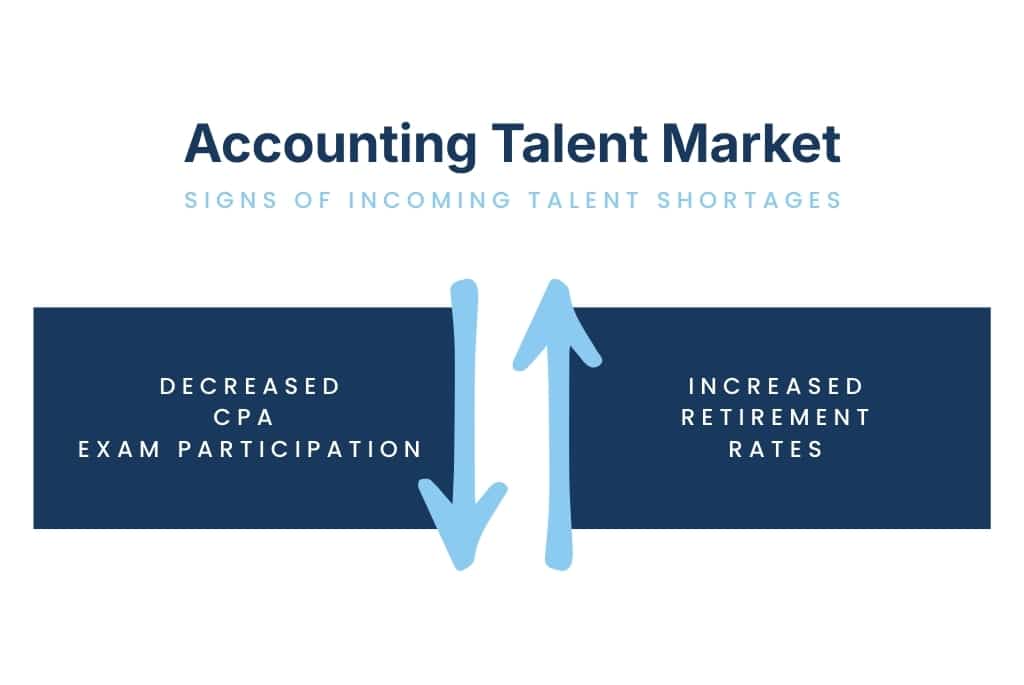
The AICPA & CIMA 2025 Trends Report shows declining CPA exam participation in several regions, alongside rising retirement rates among experienced professionals.
Meanwhile, demand continues to rise as regulatory complexity, advisory services, and technology adoption accelerate.
How Firms are Responding
Many organizations are broadening how and where they hire:
- Contract and interim accounting professionals
- Offshore and nearshore teams
- Project-based consultants
- Fractional leadership roles
Traditional “one-path” career models are giving way to more flexible talent strategies.
What Candidates Should Know
Because supply remains tight, accountants with in-demand skills have leverage, but expectations are changing.
Compensation still matters. But flexibility, learning opportunities, and work-life balance are increasingly decisive factors.
Soft Skills Are Now Core Accounting Skills
For decades, technical expertise has defined accounting excellence.
In 2026, that’s only half the equation.
As automation handles routine work, human-centered skills are moving to the forefront, especially for client-facing and advisory roles.
Employers are increasingly looking for professionals who can communicate clearly, collaborate across teams, and influence decision-making. Organizations like ICAEW report that accountants will need to blend technical expertise with business influence, data interpretation, and stakeholder engagement to stand out in 2025 and beyond.
Similarly, industry insights show that in addition to technical compliance work, firms are prioritizing soft skills such as communication, adaptability, problem-solving, and teamwork, especially as advisory functions grow and accountants work more closely with non-finance stakeholders.
These skills are essential because accountants are now expected to explain results, not just produce them.
A Shift Seen Inside Firms
In many organizations, high-performing accountants are already acting as:
- Business partners
- Risk interpreters
- Strategic advisors
Interview processes are evolving accordingly.
Rather than focusing only on technical scenarios, employers are testing:
- Decision-making under ambiguity
- Collaboration across functions
- Adaptability when assumptions change
Why This Matters in 2026
AI can surface insights, but it can’t build trust.
Accountants who can translate data into action and guide stakeholders through complex decisions will stand out.
Advisory and Strategic Accounting Roles Are Expanding
Compliance will always matter.
But nowadays, it’s no longer the main differentiator.
Accounting roles are increasingly blending compliance with forward-looking advisory services, including:
- Forecasting and scenario modeling
- Business planning and cash flow strategy
- Risk assessment and controls advisory
- ESG and sustainability reporting
Advisory work is becoming a core growth engine for many firms. For example, an AICPA/CPA.com benchmark survey on Client Advisory Services (CAS) reports that CAS continues to outpace broader firm growth, reinforcing why employers increasingly prioritize candidates who can deliver insights, not just compliance.
The Rise of Hybrid Roles
New titles are becoming more common:
- Finance Business Partner
- Strategic Accounting Manager
- Advisory-focused Controller
- Analytics-enabled Accounting Lead
These roles sit at the intersection of finance, operations, and strategy.
Recruiting Impact
Employers are prioritizing candidates who:
- Understand business drivers, not just numbers
- Can collaborate with leadership teams
- Are comfortable with ambiguity and forward-looking analysis
For accountants, developing advisory capabilities is no longer optional; it’s career insurance.
Workforce Flexibility Is Now a Hiring Standard
Hybrid work is no longer a perk; it’s an expectation.
Flexible staffing models are deeply embedded in accounting workforce planning.
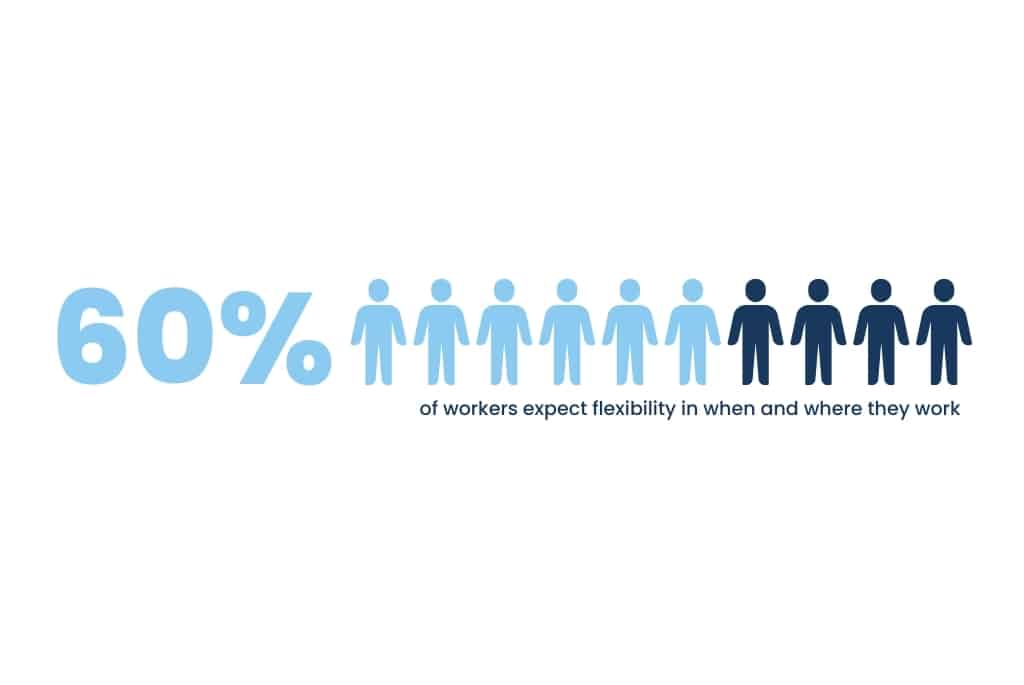
A 2024 Gallup survey found that 60% of workers now expect flexibility in when and where they work, reinforcing that hybrid models are no longer perks but baseline expectations. When used properly, hybrid and remote flexibility is a strategic tool in addressing talent scarcity and retention challenges that many organizations face in 2026.
What Flexibility Looks Like in Accounting
It’s not just remote vs. office anymore.
Firms are experimenting with:
- Project-based assignments
- Interim and fractional leadership roles
- Internal mobility across service lines
- Customized career paths
Retention has become just as important as hiring.
Why This Matters for Firms in 2026
Replacing experienced accountants is costly and disruptive.
Organizations that invest in flexibility and internal mobility are better positioned to:
- Preserve institutional knowledge
- Develop future leaders
- Reduce burnout
Compensation Is Rising, But It’s Not the Only Lever
Accounting salaries continue to rise heading into 2026, but increases are measured.
According to economic data from the U.S. Bureau of Labor Statistics, demand for accountants and auditors is projected to grow faster than average through 2030, supporting steady wage pressure.
However, firms are finding that compensation alone doesn’t close offers anymore.
What Candidates Evaluate Beyond Pay
- Learning and upskilling opportunities
- Career progression clarity
- Leadership quality
- Organizational culture
Professionals with technology, analytics, or advisory expertise can command premiums, but long-term retention hinges on growth, not just salary.
What Employers Must Articulate Clearly
Winning candidates in 2026 requires a strong narrative around:
- Career trajectory
- Skill development
- Purpose and impact
This is where experienced recruiting partners like The Richmond Group USA add real value, helping organizations position opportunities in a crowded, competitive market.
The Bottom Line for Accountants and Hiring Leaders
Accounting in 2026 is defined by transformation, not disruption.
The profession isn’t shrinking. It’s evolving.
The trends shaping the year ahead are clear:
- AI literacy is essential
- Talent scarcity continues to pressure hiring
- Advisory and strategic capabilities are rising
- Human skills matter more than ever
- Flexible workforce models drive retention
For accountants, staying relevant means learning continuously and leaning into higher-value work.
For employers, success depends on adapting how roles are defined, how talent is engaged, and how careers are built.
Those who evolve with the profession in 2026 will be the ones who lead the charge into 2027.
Accounting & Finance Division President | 804-404-2801 | krissy@richgroupusa.com